Web hosting is where, after a successful build, all your files are stored on a web server and made available to the public on the Internet. You can host your Site A website in CloudCannon that includes all the files, content, configuration, and settings needed to edit, build, and host a complete website.Site
To serve your Site on your own address, you need a domain name The human-readable address of a website on the internet, such as example.com. Domain names are used instead of IP addresses to make websites easier to remember and access. A third-party company that manages the registration and renewal of domain names. Domain registrars allow you to purchase and configure domain names, and they handle the administrative aspects of domain ownership. You must purchase a domain name from a domain registrar before you can connect it to your CloudCannon Organization as a Custom Domain.Domain Name
Domain Registrar
- Domain name — The address used to access a website (e.g., cloudcannon.com).
- Domain registrar — A third-party company that sells and renews domain names. The registrar records who owns each domain, and which nameservers answer DNS questions about it (e.g., Cloudflare Registrar, Namecheap).
The domain name of your website appears in the URL.
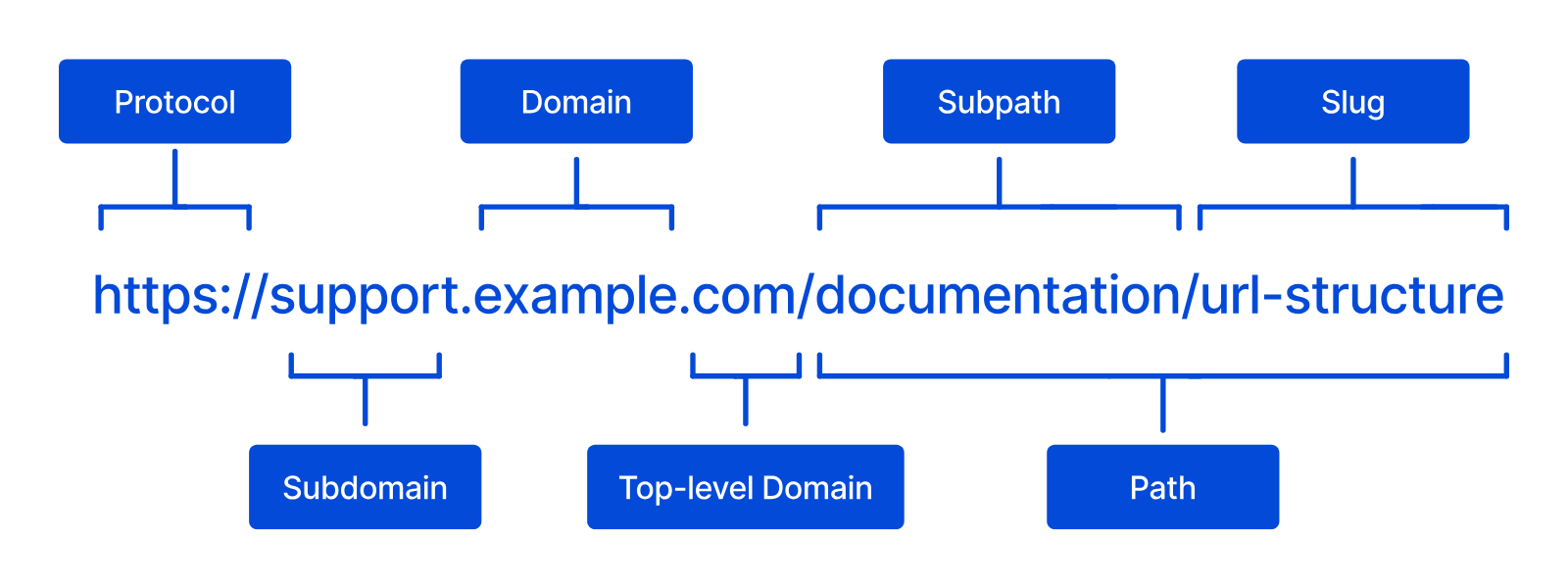
CloudCannon automatically assigns a free domain name to each Site, called a Testing Domain A free .cloudvent.net URL that CloudCannon assigns to every Site for reviewing your live website content after a successful Site build. Each Testing Domain uses a randomly generated adjective and noun separated by a hyphen. By default, CloudCannon automatically de-indexes Testing Domains so that they do not appear in search engines. A person who belongs to the same Organization as you. Organization Members are other CloudCannon users who have been invited to your Organization to collaborate on Sites, edit content, or manage settings. Each Organization Member has their own CloudCannon account with individual permissions assigned through Permission Groups, and uses one Seat in your Subscription Plan. Organization Members were previously called Team Members. A domain you own and connect to your CloudCannon Organization, so visitors reach your Site at your own address instead of its Testing Domain. You buy the domain from a domain registrar, connect it to your Organization, then add it to your Sites.Testing Domain
Organization Member
Custom Domain
Hosting on CloudCannon#
A developer, or anyone in your Organization with permission to manage Custom Domains, sets up hosting on your own domain. To host your Site on your own domain through CloudCannon, they:
- Connect a Custom Domain to your Organization.
- Choose a DNSprovider for it: CloudCannon DNSGlossary term
DNS
The Domain Name System (DNS), which allows your computer to translate a domain name, which visitors are most likely to remember, into a machine-friendly IP address, which is required to access a website.
or external DNSGlossary termCloudCannon DNS
A DNS Provider option where CloudCannon manages the DNS records of your Custom Domain. CloudCannon adds the records each Subdomain needs, and the TXT records for your SSL Certificates, for you. To use it, you replace the nameservers at your domain registrar with CloudCannon's nameservers.
.Glossary termExternal DNS
Domain Name System configuration managed by a third-party DNS Provider rather than CloudCannon DNS. External DNS allows you to host your Site on CloudCannon but manage your DNS records elsewhere, such as with Cloudflare or on your own servers. You add the DNS records CloudCannon lists for each Subdomain at your DNS Provider.
- Add the Custom Domain to your Site, so CloudCannon serves your Site on one of its Subdomains(e.g., example.com or docs.example.com).Glossary term
Subdomain
An additional name on the front of your URL, prefixing your Base Domain name (e.g., "docs" in docs.example.com or "blog" in blog.example.com). In CloudCannon, every address on your Custom Domain, including the Base Domain itself, is a Subdomain with its own hosting, HTTPS, and DNS settings. Each Subdomain serves Sites, each at its own path, or redirects visitors to another domain. A Subdomain with no Site yet shows its visitors a 404 page until you add a Site.
For more information, please read our documentation on connecting a Custom Domain to your Organization and adding a Custom Domain to your Site.
CloudCannon issues and renews an SSL Certificate A digital certificate that proves your website's identity and lets visitors connect to it over HTTPS. On CloudCannon, each Subdomain of your Custom Domain has its own SSL Certificate, which covers every Site on that Subdomain. An SSL Certificate can be auto-generated by CloudCannon, or a Custom SSL Certificate you upload.SSL Certificate
For more information on how these pieces fit together, please read our documentation on how hosting works on CloudCannon.
Do you want to host on CloudCannon?
Hosting your Site on CloudCannon might be right for you if you want to keep your hosting settings on the same platform you use to edit your content.
By default, CloudCannon serves Sites hosted on CloudCannon through a Cloudflare Content Delivery Network (CDN). Some Subdomains skip CloudCannon's CDN, depending on the hosting option chosen for each Subdomain and on your DNS Provider. A CDN is a globally distributed network of servers that improves your Site's loading time by caching your content. Visitors to your Site can then access a cached copy from a geographically closer server.
Whenever you update your Site, your hosting provider must also update these caches to prevent visitors from seeing out-of-date content. CloudCannon uses cache busting so that every time you update the content on your Site, CloudCannon will refresh all the cached copies as well.
If you don't want to host your Site on CloudCannon, you can use an external provider without interrupting your ability to edit your content in CloudCannon. For more information, please read our documentation on what external hosting is.
If you want to host your Site externally, you can also disable builds on CloudCannon. For more information, please read our documentation on what Headless Mode is.
Which combination of DNS Provider and SSL Certificate is right for your Site?
Unless you are familiar with web hosting, we recommend reading our documentation on what DNS is and what an SSL Certificate is before selecting a DNS Provider or SSL Certificate type.
DNS and SSL often work hand-in-hand. The correct combination of DNS Provider and SSL Certificate will depend on your desired Site configuration. Here are a few common examples:
- CloudCannon DNS and an auto-generated SSL Certificate (recommended) — Manage your domain settings and website security in the same place as your content. CloudCannon keeps your DNS records up to date, and issues and renews a certificate for each of your Subdomains.
- External DNS and an auto-generated SSL Certificate — Manage your domain settings through a third-party service (e.g., Cloudflare), and let CloudCannon issue your SSL Certificates. This option is good if you have existing DNS infrastructure.
- CloudCannon DNS and a Custom SSL Certificate — Manage your domain settings through CloudCannon, and get your SSL Certificate from a third-party service.
- External DNS and a Custom SSL Certificate — Manage your domain settings and get your SSL Certificate through third-party services. This option is good if you have existing DNS infrastructure and security policies that require you to have an SSL Certificate from an internally approved authority.